 info@goodhopetutoring.com
 +1-301-717-8046




The summer between eighth and ninth grade is one of those strange periods where everything feels exciting and terrifying at the same time. A new school. New teachers. A bigger building. New social dynamics. Classes that actually count toward your GPA and college transcripts.
Most students know high school is going to be different. What catches them off guard is how different and how quickly those differences show up.
What the Research Says About This Transition
The middle-to-high school transition is one of the most studied periods in adolescent development, and the findings are worth knowing, not to cause alarm but to take the adjustment seriously.
Research published in PMC found that as students move from middle to high school, grades often decline, engagement and motivation tend to be lower, and feelings of loneliness, depression, anxiety, and stress tend to rise. A 2024 study by Nygaard and Ormiston found that the transition from middle to high school had a significant negative impact on students' overall social, academic, and emotional risk levels. The study also found that this impact was greater than the one experienced during the transition from elementary to middle school.
That second finding surprises most people. The jump to high school is harder than the jump to middle school, yet it gets less preparation and attention from schools and families.
The students who navigate it best are not necessarily the smartest or the most naturally social. They are the ones who walk in understanding what has changed and with a plan for how to handle it.
What Actually Changes in High School
Understanding the real differences between middle school and high school removes a lot of the fear. Most of what students dread is vague. Getting specific about it makes it manageable.
Grades now follow you permanently. In middle school, a rough semester is a rough semester. In high school, every grade from ninth grade onward goes on your official transcript. Research shows that a student's ninth-grade grades can be more predictive of academic success in high school than standardized test scores. Colleges review all four years of high school when evaluating applications, and ninth-grade grades are factored into the cumulative GPA admissions committees use to assess academic preparation. Freshman year is not a warm-up round.
There are more teachers, more expectations, and less hand-holding. In middle school, most students had one or two primary teachers who knew them well and kept close track of their progress. High school works differently. High school requires a higher level of independence, according to school administrators. Each teacher manages 100 or more students across multiple class periods. Students who wait to be noticed when they are struggling often wait too long.
The workload is heavier and less forgiving. Compared to middle school, high school comes with more assignments, tests, group projects, and activities. It can be easy to lose track of deadlines. A missed assignment in middle school might get a gentle reminder. The same missed assignment in high school is often just a zero.
The social landscape reshapes itself. Students from multiple middle schools merge into one building. Old friend groups mix, scatter, and reform. Research using nationally representative data found that elements of middle school social integration, including teacher bonding and extracurricular participation, affect academic achievement when students enter high school. Students who stay socially engaged tend to stay engaged academically too.
The Most Common Stumbling Blocks in Freshman Year

Knowing where students most commonly struggle means those obstacles can be addressed before they become problems.
Underestimating the independence required. Middle school teachers often send reminders, check in frequently, and follow up on missing work. High school teachers expect students to track their own deadlines, reach out when they need help, and manage their own workload without prompting. Students who are not used to this level of self-management hit a wall fast in September.
Not speaking up when they're lost. Research highlights several concerns eighth graders commonly have about high school, including adjusting to new teachers, different grading policies, and the fear that teachers do not care. As a result, many freshmen sit through confusion without raising their hand or visiting office hours, often for weeks, until a test comes back with a grade that can no longer be ignored.
Choosing the wrong course load. Some students load up on honors or advanced courses before they understand the workload demands of high school. Others take the path of least resistance and end up in classes that are too easy to build the transcript they need for college. Finding the balance between taking challenging classes and ones that align with your interests is important, and it helps to think about that balance before registration, not after the semester has started.
Letting the social adjustment tank the academic one. The social changes in ninth grade are real, and they take energy. Students who spend the first month of high school entirely focused on social dynamics sometimes look up in October and realize their grades are already in trouble.
Burning out by November. Freshmen who go all in during September, joining every club, staying up late every night, and cramming for every quiz, often hit a wall before the first semester ends. Sustainability matters more than intensity, especially during the first year.
What to Do Before September
These are not vague encouragements. They are specific actions that make a measurable difference in how smoothly the transition goes.
Attend orientation and take it seriously. Most high schools offer a freshman orientation before the school year begins. Before the start of classes, many high schools offer an orientation to rising ninth graders. Take time to explore the building, note the location of classrooms and the locker, and practice opening it. Orientation also provides a chance to meet peers and teachers. Students who arrive on the first day already knowing where their classes are and having exchanged numbers with a few people walk in with a completely different energy than those who are figuring it all out in real time.
Set up an organizational system before school starts. Do not wait until homework is piling up to figure out how to track assignments. Set up a digital calendar (Google Calendar works well and is free), choose a method for keeping notes by subject, and decide on a regular study schedule before the first week of school establishes its own chaotic rhythm. Our post on free study tools every high schooler should be using covers exactly what to set up and how.
Have an honest conversation about course selection. Talk to a school counselor about the right course load for the specific student, not the most impressive-sounding one, not the easiest one, but the one that fits their current academic level and goals. If there are subjects where foundations are shaky heading into high school, those gaps need to be addressed now rather than after freshman year grades make the problem visible.
Address any academic gaps over the summer. If a student struggled with algebra in eighth grade, ninth-grade math will be significantly harder. If reading comprehension was a consistent challenge in middle school, the reading volume in high school English and history classes will expose it immediately. Summer is the window to close those gaps with targeted support before the workload of the new school year makes catching up twice as hard. For students and parents thinking through what gaps need addressing before September, how to identify and support a struggling student outlines the specific signs worth paying attention to.
Talk about what asking for help looks like in high school. Students who learned to sit quietly with confusion in middle school need to learn a different approach for high school. Experts advise students not to be afraid to seek help, as most schools have mental health resources and services available, including counselors, psychologists, and social workers. The same applies academically. Teachers who are approached during office hours or after class are almost always willing to help; they rarely chase students who are not proactive about it.
What to Do Once School Starts
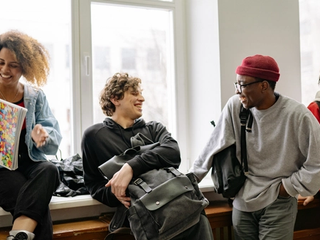
The preparation matters, but so does the first few weeks. A few habits established early in September make the rest of the year significantly easier.
Go to every class. Attendance matters. The more you are there, the more likely you are to build relationships with teachers and earn the best grades possible. Being in class shows your teacher that you are interested in doing well. This sounds obvious, but it is also one of the first things that slips when students feel overwhelmed. They avoid the class where they feel most lost, which makes the problem worse.
Build a relationship with at least one teacher early. Students who have a teacher who knows their name and knows they are trying have a built-in resource when things get hard. It does not take much, such as showing up to office hours once, asking a question after class, or emailing about an upcoming test. The effort is small and the return is significant.
Join one extracurricular. Freshman year is the right time to explore a range of extracurricular activities to identify where genuine interests lie. The activities that matter most on a college application are not the most prestigious but the ones students stick with and grow in. Joining ten things in September and dropping eight of them by October looks worse on a transcript than committing to one thing consistently. Start with one and add from there.
Check grades weekly, not just at report card time. Most high schools now use online grade portals that update in real time. Students and parents who check them weekly can catch a slipping grade when a single assignment goes missing, not when a semester’s worth has. The fix, when caught early, is always easier than the fix at the end of a grading period.
Build the study habits now that will carry through senior year. Freshman year is when students find out whether their middle school study habits are sufficient for high school demands. Most of them are not. Learning how to study effectively in ninth grade, not just memorize and cram, is one of the most valuable things a student can do for their entire high school career. Four ways to create a study habit that sticks is a practical starting point for building that system.
A Note for Parents
Your role shifts in high school, and the shift can feel uncomfortable. The level of involvement that worked in middle school often becomes counterproductive in ninth grade. High school is a major shift in how your teen will think, socialize, and manage their responsibilities. Grades now count toward GPA and college transcripts, and time management becomes crucial.
The most effective parent of a high schooler is not the one managing every deadline and checking every grade daily. It is the one who maintains an open line of communication, asks questions without interrogating, and steps in with real support when the student signals that something is genuinely wrong.
Natural moments, like car rides, dinner, or walks, tend to lead to better conversations than scheduled check-ins. Questions such as “What’s something new you noticed today?” or “Anything challenging this week?” usually work better than asking directly about grades and homework.
And if academic struggles emerge in the first semester, address them early. The students who fall behind in ninth grade and do not get support tend to continue falling behind. The ones who get targeted help early, whether from a school resource or outside tutoring, often turn things around before the trajectory has a chance to set.
The Bottom Line
The transition from middle school to high school is one of the most significant academic and social shifts a young person goes through. It is also one of the most navigable when students and families approach it with clear eyes and a concrete plan.
The students who thrive during freshman year are not the ones who feel no anxiety about it. They are the ones who arrive prepared, with their organizational systems in place, their academic gaps addressed before September, a willingness to ask for help, and an understanding that what they build this year will follow them for the next four.
If your child has content gaps that need addressing before high school starts, our team at Good Hope Tutoring Services builds targeted summer plans that prepare students specifically for the demands of freshman year. We work with students in the Maryland and DMV areas in person and with families nationwide through virtual sessions.
Good Hope Tutoring Services is a New Majority-Owned tutoring company trusted by Baltimore County Public Schools, M-NCPPC Department of Parks and Recreation, and families across the DMV for over 25 years.
Sources
- PMC / NIH: Understanding Students' Transition to High School
- MDPI: Social and Emotional Learning and the Transition to High School (2025)
- SAGE Journals: Now and Then — Examining Students' Concerns About the School Transition (2025)
- Oxford Academic: Who Gets Ahead and Who Falls Behind During the Transition to High School
- U.S. News: 9 Tips for High School Freshmen
- Prepory: High School Freshman Advice — 20 Tips for 9th Graders
- Connections Academy: Successful Transition to High School
- Parenting for College: Starting High School — A Parent's Guide to Freshman Year
- Princeton Review: What to Expect Freshman Year in High School